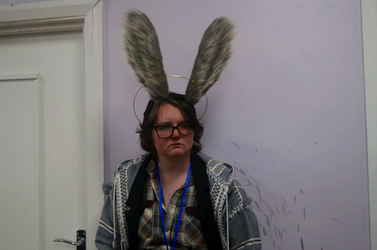
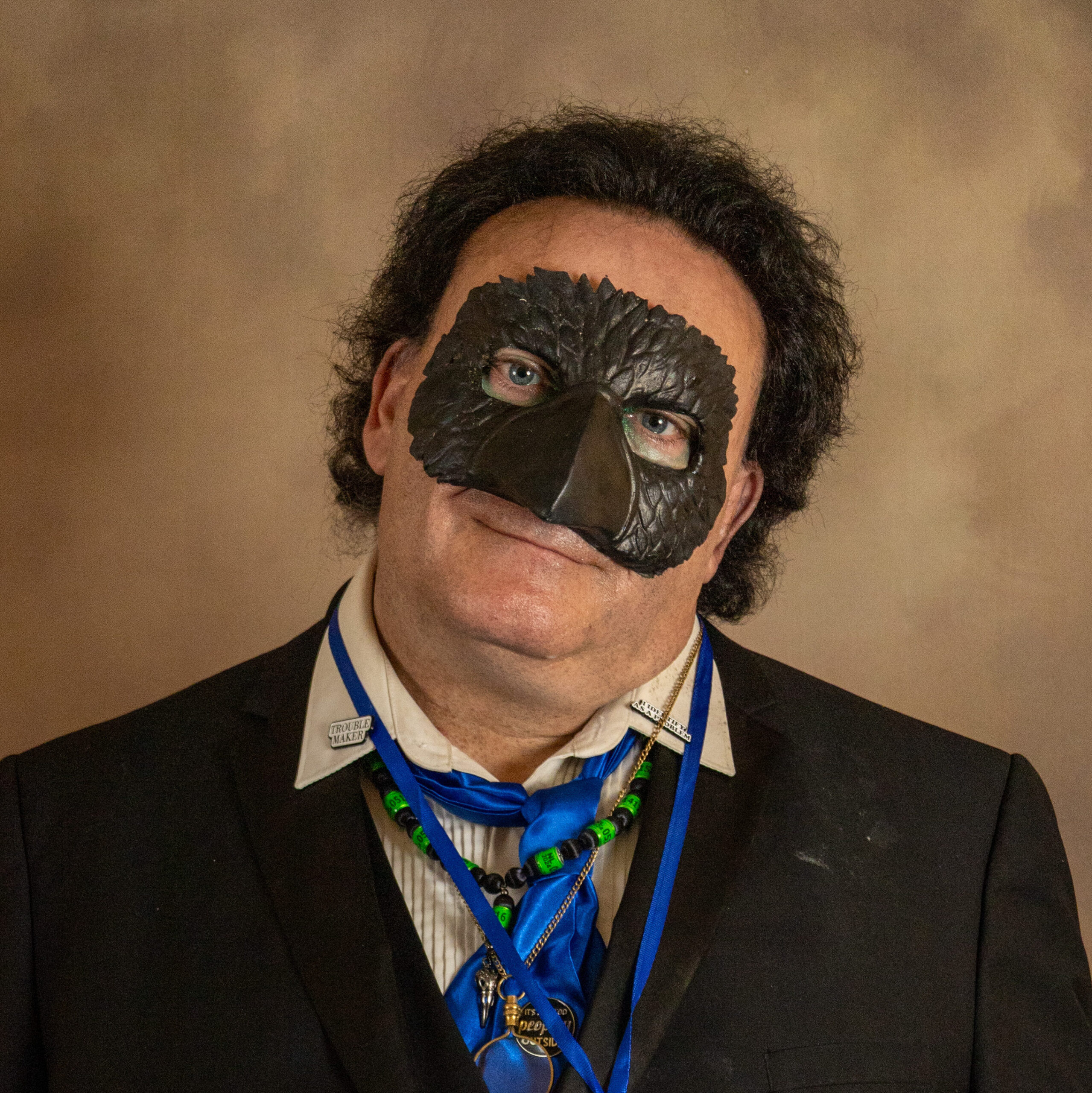
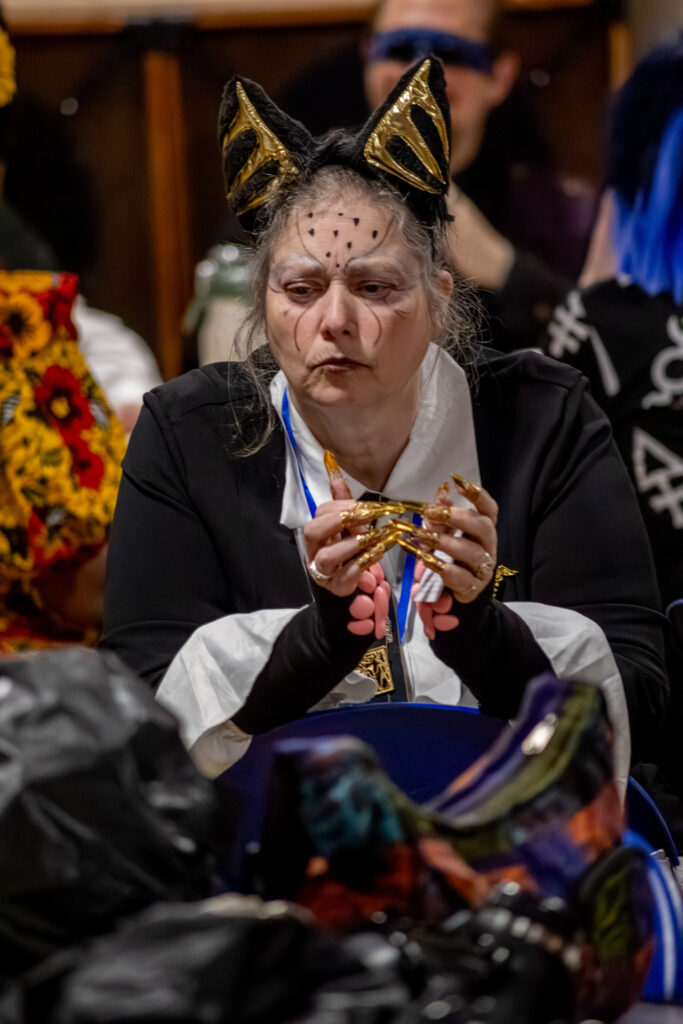
All beasts on Domus had malleable forms. While not as infinitely varied as the wild and the Wild Kith, beasts and creatures of all kinds could shift their form as needed. Whether to grow additional digits to better grip a branch or expand a body to stay afloat, these beasts adapted to the ever changing environment however they could. Some stories say that, like the Wild Kith, these beasts one day ‘Woke up’ and took on human form. If this is true, then no one knows why they lost this ability. Others say that the humanoid form was an adaptational one, a form of rapid and convergent evolution for the many, many types of beast upon Domus. The truth is not fully known, though the former story tends to be the most popular. Stories about why they can pass on their nature through a bite is also unknown though there are just as many stories. Curses, a magical solution during an infant mortality epidemic, a quirk of nature with no answer. There have been many investigations into it but no true answer has ever been found.
Beast Kith were the most prevalent genus upon Domus. With no forms of centralised government or leadership, no kind of census was ever taken but it was estimated that their number could have reached to hundreds of millions. They were also the most far spread across the many shifting lands of Domus. They are perhaps the easiest for humans to understand of the Domus Genera. They reproduce sexually and raise children, they age somewhat naturally (though at a slowed pace) unless they take magical acts to prevent it, they eat just like humans and have varied cuisines. Their cultures were just as, if not more so, varied and wildly different as human cultures. Some were loners, some formed familial groups, some came together in large unrelated communities; some formed semi-permanent settlements adapting to the land, some were nomadic, some even created cities like the Sun Singers. Some hunted for their food, gathering it where they couldn’t; others used magic to create farms with crops and livestock. Their differences were almost more numerous than their similarities to each other. Lycan communities were not even uniquely Lycan, creatures of any Genus could be found in their settlements; Wild Kith were known to live among them, Night Walkers would often take refuge if the sun was particularly unrelenting, even Sun Singers who travelled the leyline paths would often spend time living in these areas. Conflicts that did happen tended to be between settlements like these for whatever reason.
Attempting to categorise each unique variation of Lycan physiology is an ongoing and nightmarish project for scientists that has certainly not been helped by the world ending. It is generally agreed though that even if everything hadn’t collapsed, they still wouldn’t be finished. There are simply too many variations. There are Lycans for every animal on Earth and just as many for animals on Domus that have no Earth equivalent. There are Lycans that fuse different animals or seem to have features so vague that they embody the idea of an animal rather than a specific one. Animal features cannot even be tracked through ancestry as there seems to be no actual correlation between what animal features a parent has and what their child has, or in the cases of bitten lycan, the one bitten rarely, if ever, gains the features of the one who bit them. Still, it is hard to declare it random. The aspects of an animal match the personalities of the one who was bitten. While this could be put down to determinism in the case of born Lycans, the same cannot be said for those bitten. The exact magic that defines Beast Kith’s condition seems to be connected to the nature of Domus and ideas of the inner self defining the outer self. It certainly doesn’t help things that the Beast Kith form is so malleable. While defined by their animal aspect, they are able to shift things, even taking on partial or fully animalistic forms. These things often take practice as any skill does, especially for individuals bitten on Earth. Some Lycans even refuse to take a humanoid form, preferring to live life as an animal or beast. This control over their physical form doesn’t just extend to their exterior, it has been known for skilled Lycans to rearrange their own internal organs during combat to avoid lethal wounds. Still, it is not an exact science and Lycans have yet to find a way to defeat common colds with shapeshifting. Perhaps they remain the least affected by Domus’ fall because while Fae changed within nature, Lycans only changed within themselves.
Beast Kith magic is further muddied by their connection to Divination. The magic of Omens is the least understood and the hardest to quantify. What is known is that Beast Kith have a knack for piecing together omens to get answers and often receive them in their dreams. Very few receive full or detailed prophetic visions but all often dream of things that could have been or would have been, they often receive vague imagery and snippets of ideas or understandings. Many Lycan scholars agree that reality is one great weave that combines together as a puzzle, that Lycans are uniquely capable (whether natural or chosen) to see fragments of it. Some suggest that this is simply a piece of the evolutionary adaptation that defines them. That Domus was a place of constant and consistently inconsistent change, so it made sense that Beast Kith, as creatures part of this flow, would be able to spot the signs of its change and extrapolate.
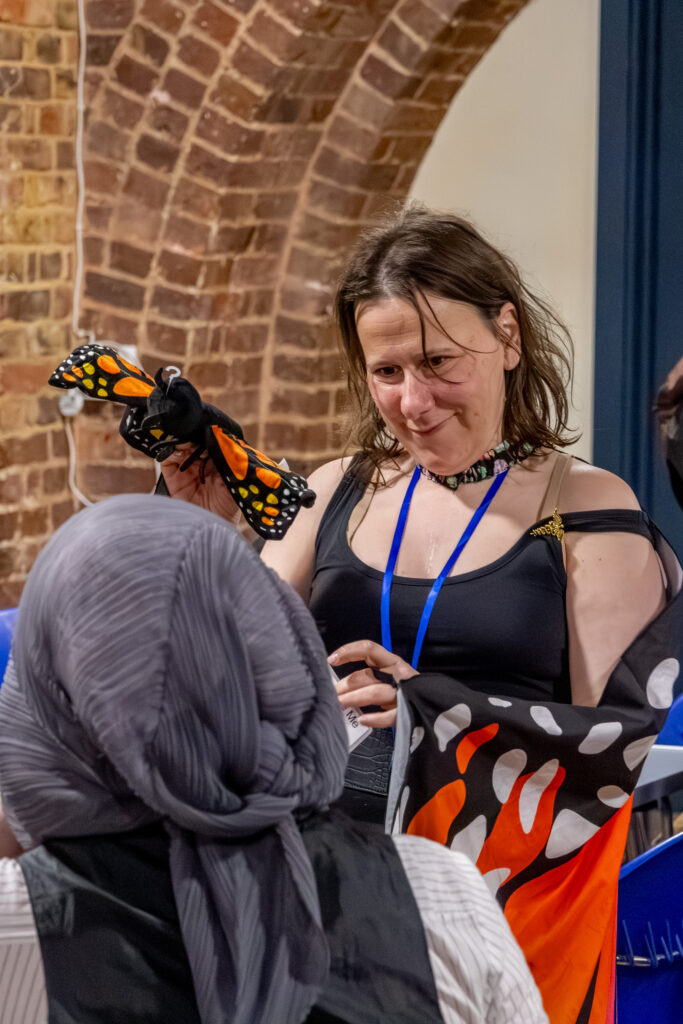
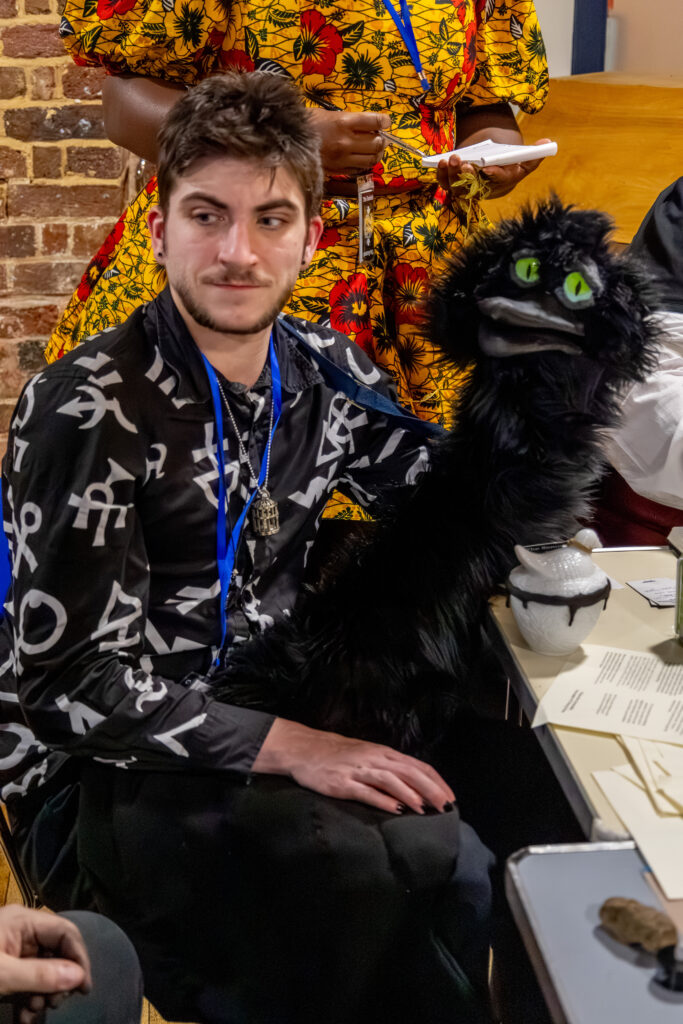
Since coming to Earth, most Lycans only ever dream of the moon. While Domus had a moon, in fact it had several, it never affected Beast Kith the way Earth’s does. No one knows why. It’s not even known if the effects of the moon were caused by the Exodus or if it has always been this way and it was simply impossible to tell. One thing is agreed and it is that there is something wrong with the moon. Lycan moods often align with the phases of the moon. While the moon wanes, they become depressive and introverted, culminating in near catatonia during the new moon. Conversely, while the moon waxes, they grow more emotionally volatile; when it is full, they enter a mindless frenzy. Some have drawn similarities between the frenzy of a Lycan and the hunger of Artificial Vampires, if there is a connection then it hasn’t been confirmed. While in these frenzied states, Lycans become violent, aggressive, and almost completely devoid of their normal personalities. They often shift to a more bestial form but this is not always the case. The change begins shortly after sun down on the night of a full moon and ends at dawn. Lycans do remember what occurred but the memories are often hazy, similar to trying to recall events while extremely drunk. For obvious reasons, this is especially hard on Lycan children who are not spared the moon’s wrath. For a while it was common practice for Lycan children to be put under anaesthesia during full moons so as not to injure themselves or others but with limited resources as well as the various other health concerns of doing such things, this has fallen out of favour.
Not all bites from a Lycan transform a person but most do. There seems to be some correlation with adrenaline levels, deepness of the bite, and distance from the heart as well as willingness of both parties. If a person wishes to be a lycan and the person biting wishes for them to be one as well, then even the smallest nick from a tooth is enough to cause the change. The change is almost always excruciating; especially if the individual is having to grow functioning, organic internal organs. While undergoing the change, they often have vivid dreams of their own lives. Past memories or potential outcomes, time becomes unhitched and most take a few days to reintegrate with linear time.
One of the most curious aspects of the Lycan condition is the allergy to silver. Silver as we have it on Earth did not exist on Domus leading to yet another new and unpleasant discovery for the Beast Kith refugees. Contact with the metal causing sharp pain; extended exposure can create a nasty rash and extreme fear in the Lycans. Some use this to create silver chains to help contain them during full moons to mixed success. The exact reason, whether magical, biological, or both, is still being investigated.
To be a Lycan is to be at the centre of unknowns. It is to be different, to be varied, to be changeable; to have what is internal shape your external in ways you do not fully understand.
Ex-Lycans
It is not uncommon in this day and age for Lycans to explicitly request becoming a vampire of some description in an attempt to stave off the effects of the moon. Some find it liberating but many find that it is not the solution that they were hoping for.
While their new forms will often remove most of their bestial aspects, a small amount is known to remain. Whether claws, oddly shaped eyes, or even just odd textures of hair. If you know where to look, it is possible to identify an ex-Lycan even in their new form.
It can be difficult for ex-Lycans to shake the habit of looking for omens everywhere. While Divination magic is possible for everyone, genuine omens are just more prevalent for Lycans and many an ex-Lycan has gone down rabbit holes chasing false ones.